Tel Aviv
THE EASTERN FAIRGROUND
ALL THE SEA ALL NIGHT
Brand Identity

The Eastern Fairgrounds complex, located at the northern end of Dizengoff Street, was founded in 1934 on the exhibition grounds of young Tel Aviv. At the time, the fair became one of the flagship events of the emerging Hebrew economy and was known for its international character, its spirit of innovation and the cultural encounter it created between East and West. For decades, the complex stood as a symbol of vision, enterprise and the aspiration of the Jewish community toward a modern future.
In recent decades, the complex has undergone extensive preservation and redevelopment, among the largest of its kind in the city. The historic fair buildings were meticulously restored under strict preservation guidelines, aiming to return their original architectural grandeur while adapting them to contemporary uses in culture, leisure, commerce and entertainment. The result is a vibrant, modern urban environment that offers a fresh city experience for all ages, at all hours of the day and night.
At the heart of the complex stands the “Hebrew Worker” statue, designed in 1934 by architect and designer Aryeh Elhanani. The statue, one of the iconic symbols of the era, expresses the pioneering spirit, labor and vision of early Tel Aviv. It was restored in 1989 and today serves as a historical and symbolic anchor for the entire complex.


Branding as a Direct Continuation of History
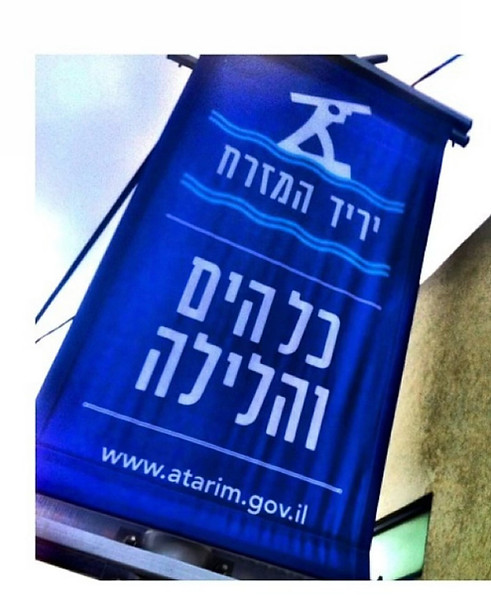
The branding process for the Eastern Fairgrounds was shaped by a desire to amplify the site’s historical memory and translate it into a contemporary visual language. The figure of the Hebrew Worker was simplified into a modern icon and expressed in a blue tone, the color of the sea, the wind and the openness of the coastal landscape.
The typography was designed in the spirit of the historical Hebrew type while adapting it to a modern graphic language. The signage system was developed as a documentary functional space, creating order and clear navigation throughout the urban environment while commemorating the story of the site. Even the signage on the buildings themselves carries a documentary typographic character that connects the past with living architecture.

The Young Zone “The Tribune”
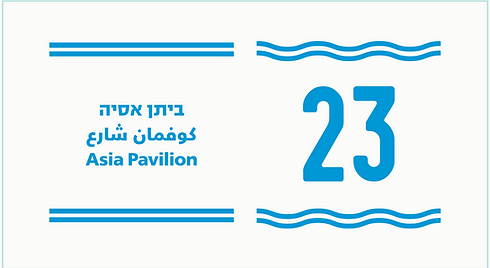
Large areas of the complex were designated for events, concerts and nightlife aimed at a younger audience. For this zone, a separate graphic language was developed, youthful, colorful and dynamic, inspired by the movement of the waves and the maritime atmosphere, joyful, free and energetic. This area was named “The Tribune” and has become a hub for performances, parties and continuous urban happenings operating around the clock.
Urban icons inspired by the Hebrew Worker figure were created and are used as a navigation and wayfinding system throughout the space while maintaining a deep connection to the site’s origins.



Slogan and Identity
The complex’s slogan
“All day and the night”
captures its essence a continuous connection between sea and city, day and night, history and present.
The branding includes a logo, symbol, logotype, complete typographic language and a high quality, functional and precise signage system, alongside a youthful graphic language for public events and cultural activity.
This is a cultural act of renewal and commemoration preserving the memory of the Eastern Fairgrounds as a foundational element of Tel Aviv’s history while translating it into a language relevant to the next generation. It is a bridge between the pioneering spirit of the past and the dynamic vitality of the present, between historical vision and contemporary urban life.


